
Liderlar Online4 daqiqa
Sustainable Fashion as an Innovative Concept for the Future of Clothing Design
Eco-Friendly Materials, Circular Economy and Innovative Approaches to Modern Clothing Design
Author: Aliqulova Marjona Valijon qizi
Institution: Kimyo International University in Tashkent, Uzbekistan
Scientific Supervisor: Bakhodir Kholmirzayevich Eshmamatov
Introduction
The global fashion industry faces significant environmental challenges associated with excessive resource consumption, textile waste, pollution, and carbon emissions. As a result, sustainable fashion has emerged as an innovative approach that integrates environmental protection, social responsibility, and economic sustainability into the design and production of clothing.
The study examines sustainable fashion as a concept for the future of clothing design, emphasizing eco-friendly materials, efficient production methods, product durability, timeless aesthetics, responsible consumption, and technological innovation.
Research Objectives and Methodology
The primary objective of this research is to examine the role of sustainable fashion in developing environmentally responsible and innovative clothing design strategies.
The study combines a review of scientific literature with comparative and conceptual analysis. It considers publications and industry reports concerning sustainable materials, circular economy principles, digital technologies, and responsible clothing production.
The article also reports findings from a questionnaire survey involving 120 university students and young consumers aged 18–30. The survey addresses consumer attitudes toward sustainable materials, clothing durability, recycling, and artificial intelligence in fashion design.
Research Results
The article reports the following positive response rates among the surveyed participants:
82% preferred environmentally friendly clothing materials.
68% expressed willingness to pay more for sustainable products.
91% considered clothing durability important.
87% supported recycling and circular fashion.
79% expressed interest in artificial intelligence-assisted fashion design.
Among the reported findings, garment durability received the highest level of support, followed by recycling and circular fashion practices.
These results suggest that the surveyed consumers value long-lasting clothing, responsible material use, and technological innovation in fashion.
Research Novelty and Conceptual Framework
The research proposes an integrated conceptual framework for sustainable clothing design comprising seven interconnected components:
Sustainable selection of clothing materials.
Resource-efficient production processes.
Product durability and extended service life.
Timeless aesthetics and adaptable design.
Consumer awareness and responsible consumption.
Collaboration among stakeholders in the fashion industry.
Technological innovation through artificial intelligence and digital manufacturing.
The framework connects environmental, technological, economic, and social dimensions of sustainability within the clothing design process.
Sustainable Materials and Production
Responsible material selection is an important component of sustainable fashion. The article discusses organic cotton, hemp, bamboo fibers, recycled polyester, and biodegradable textiles as potential alternatives within environmentally responsible clothing production.
Resource-efficient manufacturing techniques, zero-waste pattern cutting, computer-aided design, digital garment visualization, and on-demand production are examined as approaches to reducing material waste and improving manufacturing efficiency.
Circular economy strategies promote the reuse, repair, recycling, and extended use of clothing products.
Artificial Intelligence and Digital Innovation
Artificial intelligence and digital technologies provide additional opportunities for sustainable clothing design.
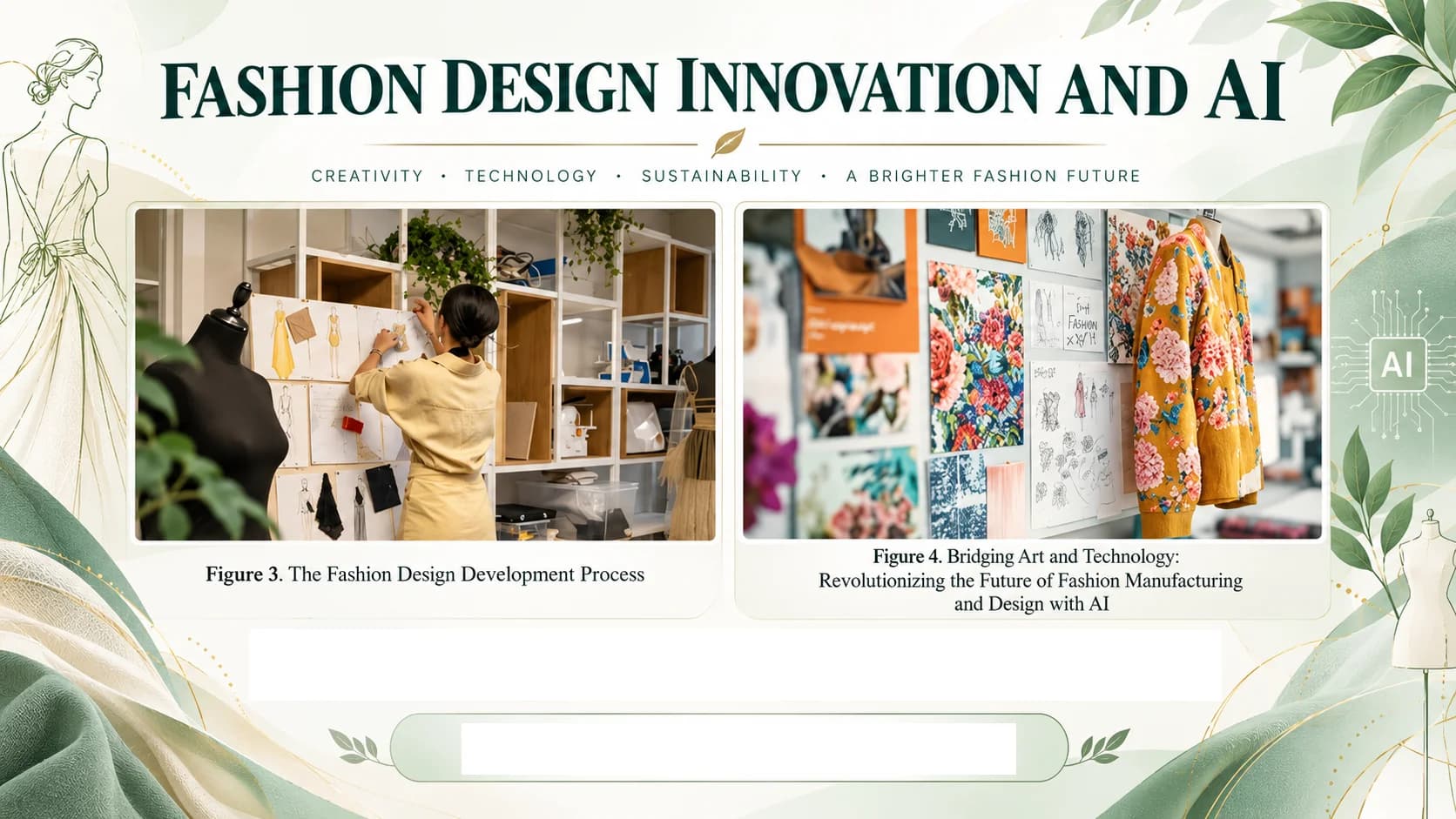
AI-assisted tools can support the generation of design concepts, fashion trend analysis, pattern development, material selection, and digital visualization.
Three-dimensional garment modeling and digital prototyping can help designers evaluate clothing concepts before producing physical samples.
Combining human creativity with digital technologies offers possibilities for improving design workflows, optimizing resource use, and developing innovative fashion collections.
Durability, Aesthetics and Responsible Consumption
Sustainable clothing design emphasizes the creation of durable, functional, aesthetically appealing, and adaptable garments.
High-quality materials, reliable construction, repair-friendly design, and timeless silhouettes may extend product life and reduce unnecessary clothing replacement.
Consumer awareness and responsible purchasing decisions are also important factors in the transition toward more sustainable fashion systems.
Conclusion
Sustainable fashion represents an important direction for the future development of clothing design and production.
The integration of environmentally responsible materials, circular economy principles, efficient production processes, long-lasting product design, and modern digital technologies provides opportunities to reduce waste and improve resource efficiency.
The proposed conceptual framework highlights the importance of collaboration among designers, researchers, manufacturers, policymakers, and consumers.
The study concludes that sustainable fashion should be approached not only as an environmental responsibility but also as an innovative design strategy supporting long-term industrial development.
Keywords: Sustainable Fashion, Clothing Design, Circular Economy, Eco-Friendly Materials, Sustainable Production, Artificial Intelligence, Innovation, Consumer Awareness.
Publication: Symposium on Advanced Studies and Future Directions, Volume 7, Issue 2, June 2026, pp. 420–434. Barcelona, Spain.

Muallif
Aliqulova Marjona Valijon Qizi
KIUT talabasi · Fashion dizayneri · Moda tarixi bilimdoni · Skeching ishqibozi · Ijodkor