
Liderlar Online3 daqiqa
The Role of Artificial Intelligence Technologies in Modern Education
Perspectives and Challenges of AI Integration in Learning Systems
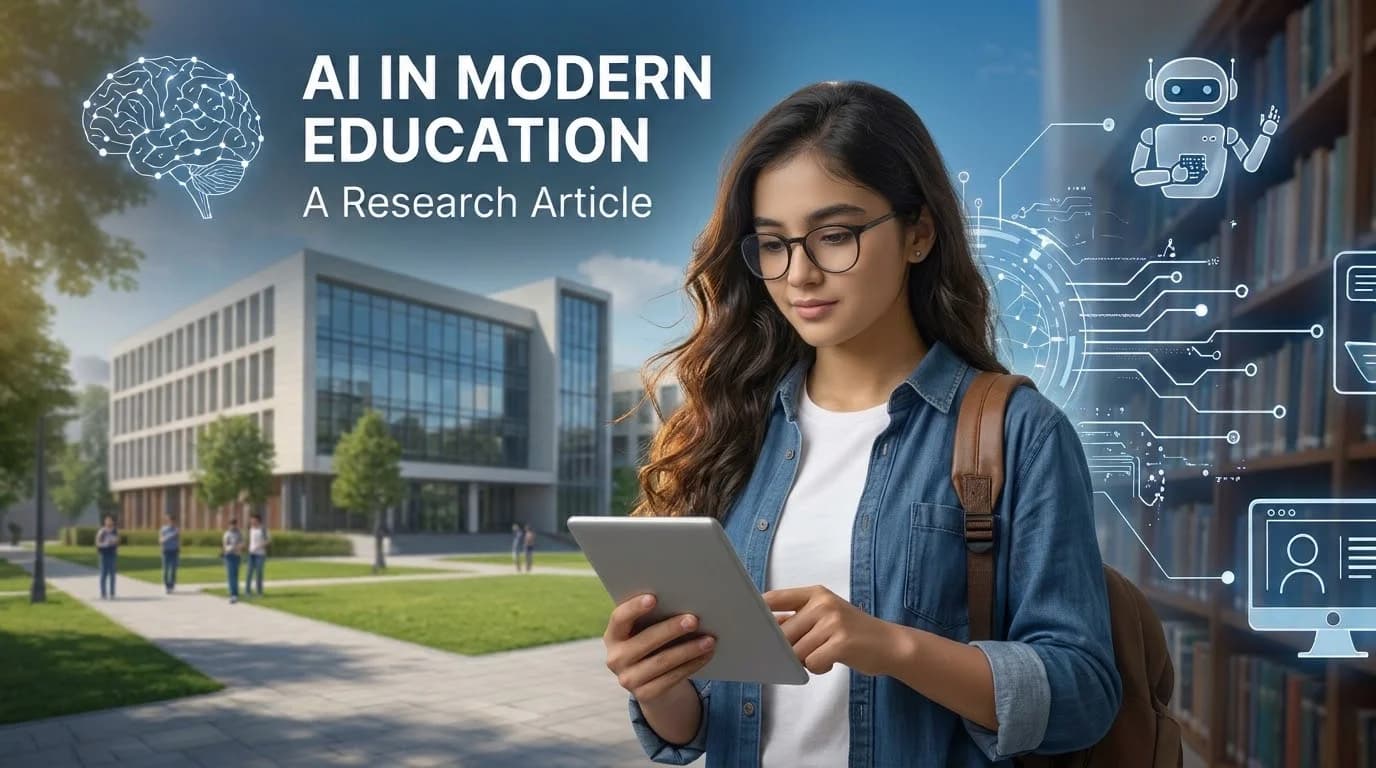
THE ROLE OF ARTIFICIAL INTELLIGENCE TECHNOLOGIES IN MODERN EDUCATION
Abstract: This article examines the integration and impact of artificial intelligence (AI) technologies within contemporary educational systems. It analyzes how AI-driven tools enhance personalized learning, automate administrative tasks, and reshape traditional teaching methodologies. Drawing upon recent pedagogical literature, the study evaluates both the benefits and challenges of implementing AI in classrooms.
Keywords: IMRAD, artificial intelligence, modern education, personalized learning, educational technology, adaptive systems.
1. INTRODUCTION
The rapid advancement of artificial intelligence (AI) has transformed numerous industries, with education being one of the most profoundly impacted sectors. Traditional one-size-fits-all teaching models are increasingly being supplemented—and sometimes replaced—by adaptive, AI-driven learning environments (Luckin et al., 2016). AI technologies offer unprecedented opportunities to customize instruction, provide real-time feedback, and streamline administrative workloads for educators.
However, integrating AI into education also raises critical questions regarding data privacy, equity of access, and the changing role of the teacher (Holmes et al., 2019). The primary objective of this research is to analyze how AI technologies influence modern pedagogical practices and to evaluate their overall effectiveness in enhancing student outcomes.
2. METHODOLOGY
This study adopts a qualitative, desk-based research design utilizing a comprehensive literature review of peer-reviewed articles, educational reports, and case studies published between 2018 and 2025. Key concepts such as adaptive learning systems, automated grading, and intelligent tutoring systems (ITS) were analyzed to synthesize current trends and future projections regarding AI implementation in global educational institutions.
3. RESULTS
The analysis of recent educational data and literature reveals several significant findings regarding AI integration:
Personalized Learning Pathways: AI-powered algorithms successfully analyze individual student performance data, tailoring coursework and pacing to meet specific learning needs (Chassignol et al., 2018).
Efficiency in Administration: Educators report a substantial reduction in time spent on routine administrative duties, such as grading multiple-choice assessments and tracking attendance, allowing more focus on direct student mentorship.
Enhanced Accessibility: AI tools, including real-time translation, speech-to-text, and automated captioning, have significantly improved learning accessibility for students with diverse needs and disabilities.
4. DISCUSSION
The findings confirm that AI acts as a powerful catalyst for modernizing education. As noted by Holmes et al. (2019), intelligent tutoring systems can simulate one-on-one human tutoring, which historically yields higher academic achievement.
Nevertheless, challenges remain prominent. Over-reliance on automated systems risks diminishing human empathy and critical thinking development if not properly balanced. Furthermore, institutional disparities in technological infrastructure threaten to widen the digital divide between developed and developing educational contexts (Zhong, 2020). Therefore, a hybrid approach—where AI supports rather than replaces human educators—remains the most viable strategy.
5. CONCLUSION
In conclusion, artificial intelligence holds transformative potential for modern education by fostering personalized learning experiences and optimizing operational efficiency. While significant hurdles such as ethical concerns and digital inequality persist, strategic integration of AI under careful pedagogical guidance will define the future of successful educational frameworks.

Muallif
Hotamova Sabrina Nusrat Qizi
BuxDU talabasi · Xorijiy tillar fakulteti · B2 sertifikati · Kitobxon · Til o‘rganuvchi